BAHÁ’Í WORLD CENTRE — In places around the world, Bahá’í Local Spiritual Assemblies are increasingly becoming a trusted presence in their communities, standing with families in hardship, helping young people find direction, and working alongside local officials.
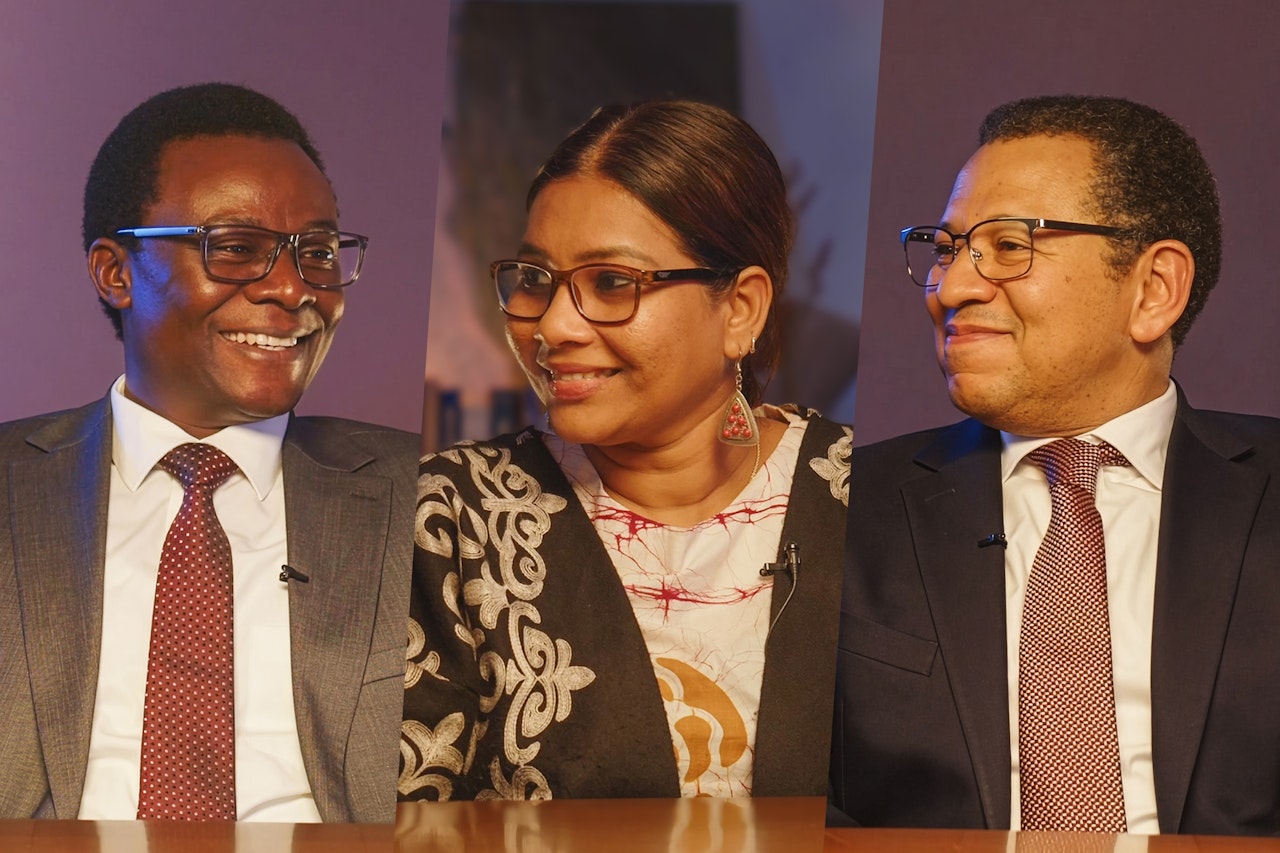
In the latest podcast episode of “In Conversation,” three members of the Continental Boards of Counsellors—Billy Silva of the United States, Townsend Lihanda of Kenya, and Niroshni Saleh of Sri Lanka—reflect on how the relationship between the Assembly and the community is taking shape.
Comprising nine members elected annually, the Local Spiritual Assembly is a distinctive institution. Mr. Silva describes the spiritual character of its election, in which there is “no campaigning, there is no competition or electioneering.” The process is conducted by anonymous ballot, with each person “turning to God” in an effort to choose those who would “serve most selflessly in the community.”
These Assemblies’ concerns extend to the whole community. Mr. Lihanda describes their members as “humble servants in the community who are part of the community itself,” attentive to “the social and material and, at the same time, spiritual progress of these communities.”
Mrs. Saleh describes how, in one locality in Sri Lanka, the Assembly has earned such trust that “the local health authorities, the local government agent,” and other public services rely on it.
She explained how this trust can change the character of encounters that might otherwise feel formal or intimidating. In one locality in Sri Lanka, a number of families had not registered for birth certificates or identity cards that would be essential for children to enroll in school and for families to access public services. Because the Assembly was already in close contact with households, local authorities turned to it for assistance.
“When the Assembly approached these families,” says Mrs. Saleh, “they felt at ease, not tense,” as people sometimes do when government agencies visit. It was the Assembly’s loving guidance and its way of approaching families that encouraged them to register.
District and local authorities later trained the Assembly to assist with documentation and asked how they too might build such trust with the population.
The discussion then turns to young people. Mr. Lihanda recounts a story about a community where, after two young people had taken a few belongings from a neighbor, a mother, rather than calling the police, asked the Assembly to help. The Assembly opened a conversation with the youth and their families, exploring how difficult circumstances and a disconnection from community life may have shaped their choices.
From that understanding, a response took shape: the young people were drawn more fully into the life of the community. Their increased participation in educational activities nurtured qualities such as service and humility; friends working as carpenters helped them learn the trade; and others nearby lent support. They now earn their living, Mr. Lihanda says, and the experience shifted how the whole community responds to such situations, coming to see “everybody as part of one family.”
Mr. Silva describes a Local Spiritual Assembly in the Midwestern United States responding to a long history of racial prejudice as something to be examined and worked on together, over the course of years, even generations. Drawing on words of the Universal House of Justice—that “the power to transform the world is effected by love”—he explains that “one of the aims of Local Spiritual Assemblies is to help their communities and individuals build havens of peace, havens of unity, where humanity can find safety in the face of so many challenges.”
These Assemblies, in the words of ʻAbdu’l-Bahá, are “shining lamps and heavenly gardens, from which the fragrances of holiness are diffused over all regions... and the lights of knowledge are shed abroad over all created things.” Reflecting on those words, Mr. Silva speaks of “the special bounty that it is to have these Local Spiritual Assemblies in communities around the world.”
The podcast episode is part of the “In Conversation” series, a collective exploration by several individuals of the practical application of Bahá’í principles to the building of peaceful societies.