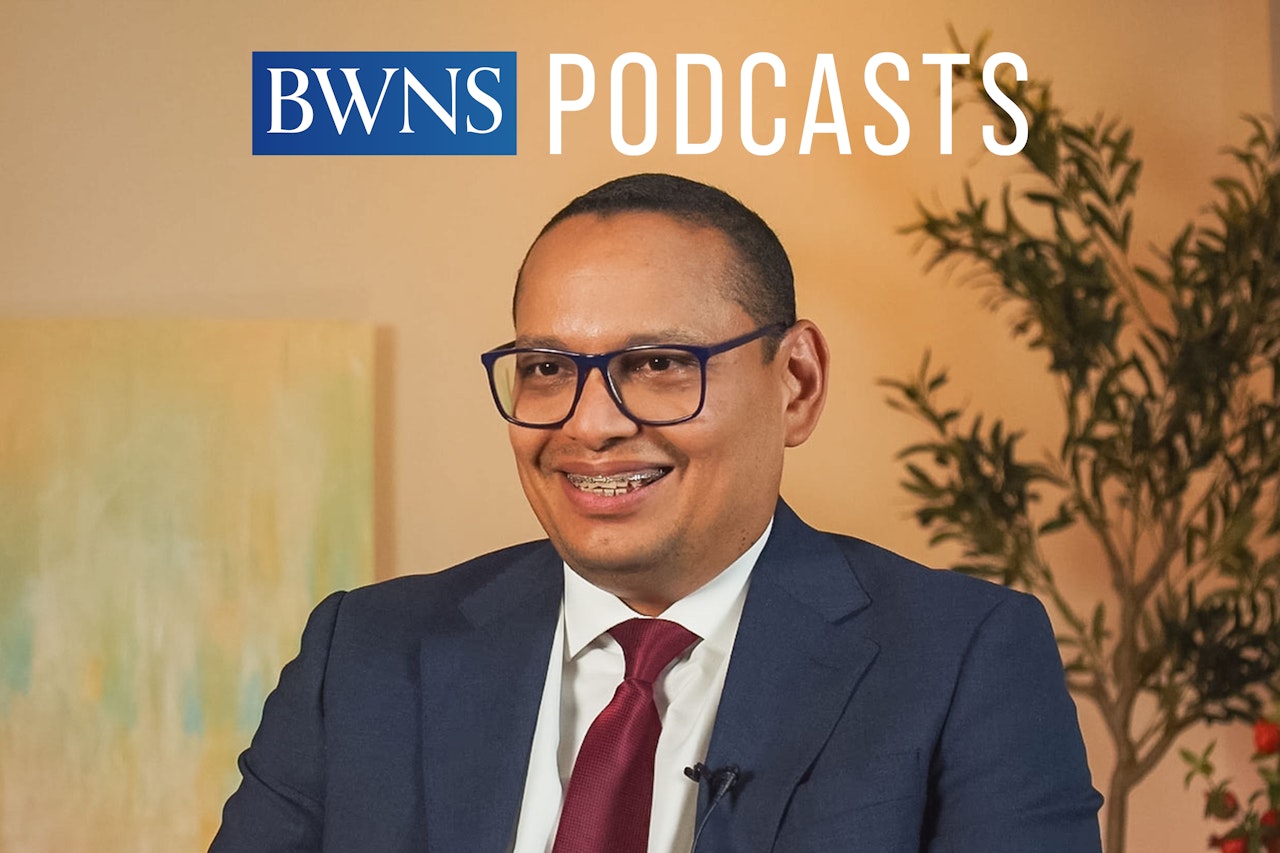
BAHÁ’Í WORLD CENTRE — In a recent podcast episode from the News Service, Blas Cruz, member of the Board of Counsellors in the Americas, describes how, in two port cities on Ecuador’s Pacific coast where daily life turns near the sea, groups of families are learning to weave a shared life of service and mutual care, drawing on capacities they are developing through Bahá’í moral and spiritual education endeavors.
Mr. Cruz recounts how, a few years ago, families in Manta and its smaller neighbor Jaramijó began meeting to improve their surroundings, both material and spiritual. At first, he says, they imagined unity as simply “being happy together,” but before long “they began to look at what truly builds unity in their neighborhoods.”
One answer they found was education. Some children were quietly dropping out of school for lack of uniforms and supplies, so parents began saving outgrown shoes and gathering books and notebooks others no longer needed to build a shared bank of supplies. Those who received them, Mr. Cruz notes, did not come to see themselves as “the poor people of the neighborhood,” but as contributors to the same principle of unity.
The same concern extended to how the young people spent their free time. Along the shore, beach soccer games among the youth had become settings marked by the sale of alcohol and by coarse language. The players themselves began to feel the contradiction, Mr. Cruz relates: “If we’re meeting and talking every week... to see how we can improve our conditions, but then behave the way we always have the moment we go to play sports, what is the difference?”
The home has also been the scene for the same reflection. Recalling a teaching of ‘Abdu’l-Bahá that a family is like a nation in miniature, Mr. Cruz describes families considering the part that women and men, and parents and children, each can play in fostering more harmonious relationships within the home. As more people take part in moral education and the wider range of community-building endeavors, he notes, fewer children are dropping out of school.
The rhythm of a fishing town shapes this shared life. The men are often at sea for two or three months, yet on returning, Mr. Cruz says, their first question is “how are the studies going?” before they take up facilitating their children’s moral and spiritual educational programs. That devotional spirit travels with them onto the water. Because prayer books were easily ruined at sea, families began sealing printed prayers in plastic, and many households first connected with the groups of families through a prayer passed between friends on a boat.
The same aspiration runs through how parents speak of their children. Many parents did not finish secondary school themselves, yet, Mr. Cruz recounts, they say, “I want my children to surpass me in every way,” not only materially but spiritually. That sense of ownership has reached the neighborhoods too, where families have taken up reforestation, repainted playgrounds, and improved lighting in public spaces, asking, “we are the owners of ‘this house.’ Why are we waiting for other people to come and organize our neighborhood for us?”
None of this has come without hardship. The security situation has grown more precarious in recent years, and communities like Manta’s have felt it directly, as criminal groups pressure local fishermen to let their boats be used for drug trafficking. Amid such strains, Mr. Cruz says, the families are learning a resilience rooted in connections with one another. “When one family falls, others just pick them up and keep walking,” he explains, describing communities “not building a society that points at the one who fell,” but havens of peace wide enough to embrace everyone.
The podcast episode is part of the “Insights from the Field” series, which provides firsthand accounts that narrate specific Bahá’í efforts in the field of action.