At 50th ABS conference, participants ask how oneness impacts their fields
Participants from various fields of academic inquiry explore how the principle of the oneness of humanity informs their efforts.
October 23, 2026
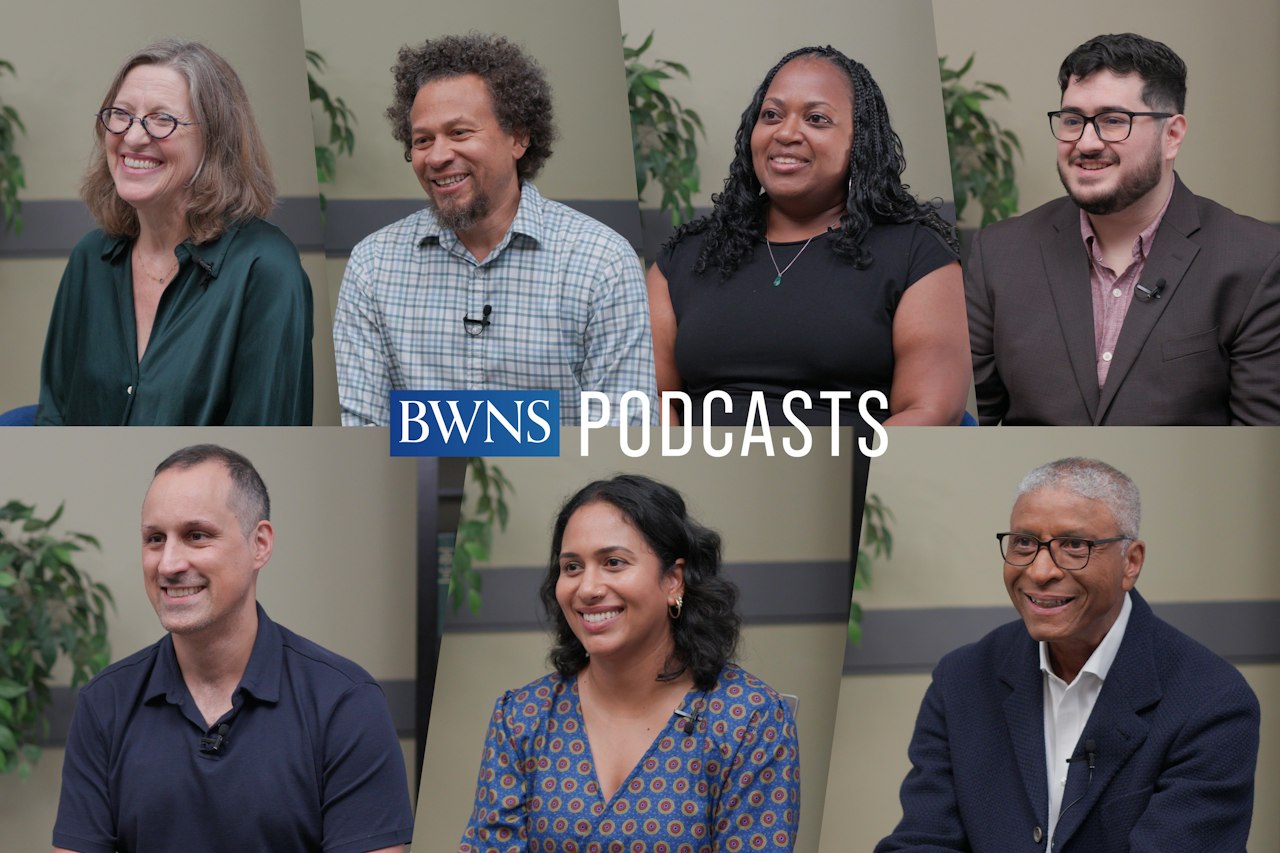
BAHÁ’Í WORLD CENTRE — In the latest episode of “Insights from the Field,” a few from among some 2,100 participants in the 50th annual conference of the Association for Bahá’í Studies (ABS) in North America explore the implications of the principle of the oneness of humanity for diverse professional fields, including health, geography, anthropology, political science, and technology.
In these reflections, participants kept returning to a common question: how does the principle that humanity is one change how people understand and contribute to their academic fields?
For Jasmine Miller-Kleinhenz, a cancer researcher at the University of Mississippi Medical Center, developing treatments for an aggressive form of breast cancer raises a further question: why was a particular population of women especially affected? Explanations attributing this to their ancestry, she said, did not seem to account for the full picture.
Seeing humanity as one family, explained Dr. Miller-Kleinhenz, means asking whether society is organized to support the health of all its members. This perspective prompted her to examine the conditions in which the women lived. Many lacked access to green spaces, nutritious food, and quality education. These conditions, she explained, reflected choices about how society is organized and who has access to its resources.
Her research examines whether deprivation in a neighborhood may affect the body and contribute to differences in health outcomes, and if changing those conditions could improve health. Oneness, she said, “can’t just be something nice that I do on the side... it also has to shape my questions.”
Clinical psychologist Michael Penn explores how recognizing a spiritual nature shared by all people has implications for both individual care and the life of a community. He questions the tendency to treat biology and social experience as the only determinants of a person’s future. The Bahá’í teachings on the human spirit, he said, affirm people’s capacity for choice and growth, including their ability to reflect on their lives and act in accordance with deeply held values.
This perspective also directs attention to the relationships that help people develop those capacities. Through the Mental Health Collaborative group of the ABS, Dr. Penn and colleagues explore how community life can support well-being. “How can we cultivate the kinds of communities, the kinds of social relationships, that lead to improvements in mental health amongst large numbers of people?” he asked.
Dr. Penn described how Bahá’í community-building initiatives bring people of diverse religious, cultural, and economic backgrounds together for prayer, meditation and uplifting conversation. These initiatives, he said, can nurture relationships that are “supportive, encouraging, meaningful,” making the shared life of a community a source of strength for people experiencing difficulties.
The relationship between spiritual insight and scientific inquiry was also explored by anthropologist Whitney White-Kazemipour. She noted that science and religion are often assigned separate roles, with science supplying the facts and religion the values. Dr. White-Kazemipour described a closer relationship: “We can look at science and religion as two systems of knowledge, both working towards an accurate understanding of reality.”
Adib Shafipour, a researcher working on artificial intelligence applications for disease detection, discusses bringing these systems of knowledge together to shape the questions guiding technological development. He noted that religion is often treated as a matter of personal life, apart from scientific work. Drawing on spiritual insights, he suggested, opens up questions such as: “What kind of person is this technology enabling us to be?” These insights can help people “develop technology in a different way that allows us to use it more thoughtfully.”
Questions about the kind of society people are helping to build also informed the reflections of Derik Smith, a professor of literature at Claremont McKenna College. He considered how the principle of oneness shapes both the aims and methods of work for social justice, stating: “Rather than pursuing social justice by finding the enemy and resisting or fighting against that enemy, we are trying to create social justice by constructing the society that we want to see, with all who are willing to join.”
The podcast episode is part of the “Insights from the Field” series, which provides firsthand accounts that narrate specific Bahá’í efforts in the field of action.